Workplace Solutions
Legal Excellence
Unparalleled experience and expertise in the workplace.
Unparalleled experience and expertise in the workplace.
FortneyScott is a Washington, DC-based law firm counseling and advising clients on the full spectrum of workplace-related matters. The firm offers clients unparalleled experience and expertise by its attorneys, who formerly held senior positions at the U.S. Department of Labor (DOL), Equal Employment Opportunity Commission (EEOC) and other government agencies, in corporate and Congressional legal staffs, in major law firms, and who served as a judge on an international tribunal.
Join FortneyScott attorneys on Wednesday, October 28, 2026 from 12:00pm to 1:00pm EDT for a timely and practical webinar on wage and hour. Wage-and-hour compliance continues to be a priority as it evolves in 2026, with new U.S. Department of Labor opinion letters addressing compensable time, travel, meal periods, rounding, bonuses, exemptions and tip practices, alongside significant federal enforcement activity. This one-hour webinar will examine the year’s most important federal developments and translate them into practical compliance lessons for employers. The program will also highlight distinctive District of Columbia wage-and-hour requirements, including current minimum and tipped wage rates, overtime, wage notices, pay statements and recordkeeping obligations, and will conclude with a practical wage-and-hour audit checklist. To register for this webinar, please CLICK HERE .
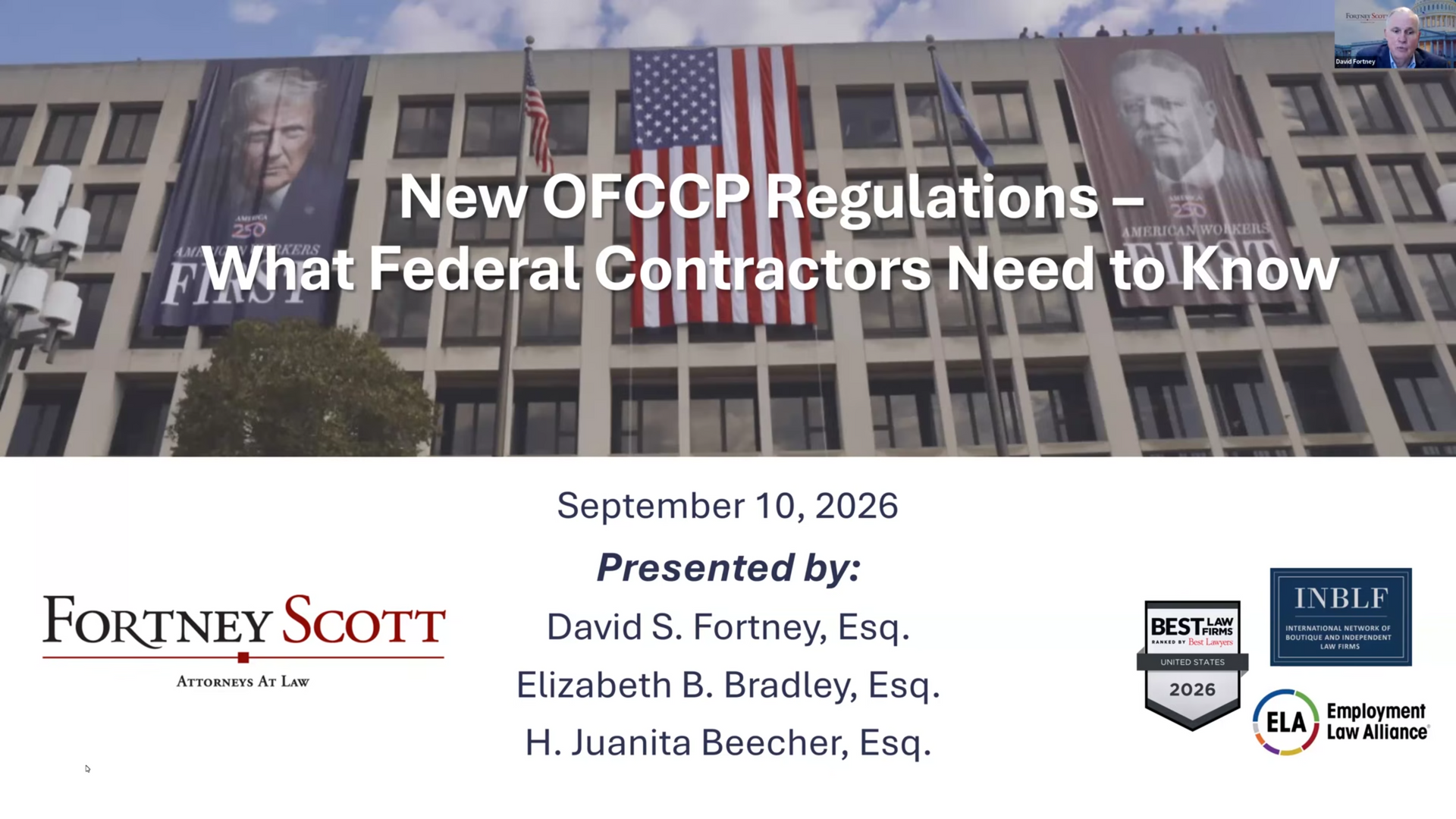
On August 21, 2026, the OFCCP finally published its final rules upending long-standing affirmative action requirements for federal contractors. While the elimination of EO 11246 regulations was expected, the substantial changes to Section 503 were less expected. By September 21, contractors must not only update their systems to remove now banned requirements but also determine how they will meet their affirmative action requirements without data collection. We will break down the most important developments, explain which obligations remain in place, and highlight practical steps organizations can take now to reduce risk, preserve defensible compliance practices, and prepare for what comes next. In this webinar, you will learn how to: Identify the OFCCP changes most likely to affect your affirmative action program strategy; Evaluate how revised Section 503 requirements may affect disability-related data collection, outreach, and documentation; Understand continuing VEVRAA obligations for protected veteran compliance. Manage transition issues for current and upcoming AAP cycles; and Prioritize practical next steps for policies, records, audits, and stakeholder communications.
Register for FortneyScott's Webinar on New OFCCP Regulations – What Federal Contractors Need to Know
Join FortneyScott attorneys on Thursday, September 10, 2026 from 12:00pm to 1:00pm EDT for a timely and practical webinar on the revised OFCCP regulations and how contractors should respond. To register, click here . On August 21, 2026, the OFCCP finally published its final rules upending long-standing affirmative action requirements for federal contractors. While the elimination of EO 11246 regulations was expected, the substantial changes to Section 503 were less expected. By September 21, contractors must not only update their systems to remove now banned requirements but also determine how they will meet their affirmative action requirements without data collection. We will break down the most important developments, explain which obligations remain in place, and highlight practical steps organizations can take now to reduce risk, preserve defensible compliance practices, and prepare for what comes next. In this webinar, you will learn how to: Identify the OFCCP changes most likely to affect your affirmative action program strategy; Evaluate how revised Section 503 requirements may affect disability-related data collection, outreach, and documentation; Understand continuing VEVRAA obligations for protected veteran compliance. Manage transition issues for current and upcoming AAP cycles; and Prioritize practical next steps for policies, records, audits, and stakeholder communication s. To register for this webinar, please CLICK HERE .
FortneyScott
Recognized both nationally and locally, FortneyScott is one of the leading management employment law firms in the highly prestigious “Best Law Firms” by U.S. News & World Report and Best Lawyers (2011 - 2026).